
How to Check Criminal History in South Fork
Start at the office that created the record. South Fork Police can identify its incident material, the town court handles municipal citations, and the Rio Grande Combined Court clerk holds state criminal case files. A statewide CBI result serves a different purpose and may not reflect a very recent local event. Use a known event number, citation number, date, or case number whenever possible.
- Review the official South Fork weekly police report for an incident or citation number.
- Ask South Fork Police or the town clerk for the precise report or media needed.
- Contact South Fork Municipal Court if the citation alleges a town-code or municipal offense.
- Check the Rio Grande County jail and Combined Court when the event led to custody or state charges.
- Use Colorado ICHC for a Colorado-wide name check, then confirm any unclear disposition with the court.
This sequence prevents a common error: treating the town activity table as a complete criminal history. For broader county procedures, the Rio Grande County criminal history overview explains the roles of the sheriff, clerk, CBI, and corrections system.
South Fork Weekly Police Reports
South Fork publishes a useful weekly report table on its official town homepage. Rows can show an incident number, date reported, narrative or charge summary, and category. A separate citation portion can show a citation number, date, and charge description. The table is a practical discovery tool because its identifiers make a later records request more exact.
It is not an arrest roster or a measure of crime. The publication also covers public services, accidents, suspicious vehicles, and other calls that may not involve an arrest or criminal charge. A row reports activity, not guilt, and a short summary is not the complete report. Record the event number and ask the town which releasable documents or media are tied to it.
The official South Fork government page is the source for the town publication and current notices.

Use the live town page because weekly entries and office notices change over time.
The South Fork Police Department
South Fork Police is the custodian to approach for a report created by its officers. The official directory lists Chief OJ Pierce at 719-873-1040 and ojpierce@southfork.org. It also lists officers Brent Cranfill, Lynn Drain, David Kemmling, and Jeff Moore. Town Hall is at 0100 Silver Thread Lane, and the main number is 719-873-0152.
A focused request should identify the SFPD event number, incident date and time, location, involved party, and exact item sought. State whether the request concerns a written report, photographs, body-camera footage, or another kind of media. Broad requests can require more retrieval work and may include material subject to redaction. Asking for a fee estimate before a large production is sensible.
South Fork Police
Contact: Chief OJ Pierce
Phone: 719-873-1040
Email: ojpierce@southfork.org
Town Hall: 0100 Silver Thread Lane
South Fork Records From a Distance
South Fork sits west of the county justice offices along the mountain corridor, so a single event can require contacts in more than one town. Phone and email checks can establish the custodian before a trip. Town Hall publishes weekday hours of 9:00 a.m. to 4:00 p.m., and records inspection is by appointment during those hours.
The clerk states that a records response ordinarily takes three working days. Extenuating circumstances may extend that period to seven working days, and retrieval or copy fees may apply. Those periods describe a response process, not a promise that every requested police record will be released in full. Criminal justice records can require review and redaction under Colorado law.
Call ahead when access needs, weather, or mountain travel affect a visit. The town's official phone and email channels are safer than a third-party directory, especially when an officeholder or schedule may have changed.
Arrests and Bookings in South Fork
South Fork does not have a verified city jail or stable public municipal custody lookup. When South Fork Police makes an arrest, the incident report stays with the police department, but custody questions move to the Rio Grande County jail in Del Norte. That split means a town weekly report may show an incident while the booking status must be confirmed elsewhere.
Ask the county jail about current custody, bond, release, or transport. Ask Rio Grande Combined Court about filed state charges and hearing dates. If the person later enters state correctional custody, use CDOC Offender Search rather than expecting a county booking record to show the later placement. The Rio Grande County arrest history guide gives the full official-channel sequence.
A booking charge is an allegation recorded at intake. It can differ from the charge a prosecutor files, and neither entry by itself establishes a conviction. The final disposition belongs in the court file.
Tracing a South Fork Arrest East
Transport can remove an arrest from immediate view in South Fork. Preserve the police event number, note the arresting agency, and ask which facility accepted the person. Then use the person's full legal name and date of birth when the receiving office permits those fields. Similar names make identifiers important.
A useful trail has three distinct records. South Fork Police documents the encounter and arrest. The county jail documents custody and booking. Rio Grande Combined Court documents the prosecution, including filed charges, hearings, pleas, and disposition. If no public jail roster is available, the correct fallback is a direct call to the sheriff or jail, not an unofficial directory.
If an older county booking no longer answers where a person is held, check the state corrections locator. A release, transfer, dismissal, or sentence can change which system has the current answer.
South Fork Municipal Court Records
South Fork Municipal Court meets on the first Monday of each month at 5:00 p.m. in Town Hall. The official page lists Judge Jim McDonald and court clerk Melanie Hart. Court questions can go to 719-873-0152 or courtclerk@southfork.org. No stable public defendant-name portal was verified, so a narrow clerk inquiry is the practical route.
| Court Name | South Fork Municipal Court at Town Hall |
|---|---|
| Case Types Heard | Town ordinance and municipal citation matters within the court's authority |
| Case Lookup Channel | Municipal Court clerk by phone or email; no verified public name-search portal |
| Useful Identifiers | Defendant name, citation number, violation date, and scheduled appearance date |
| Published Fees | $50 court cost or deferred sentence; $50 nonjury trial; $75 jury trial; $25 jury filing; $50 default judgment |
The court page warns people not to use the separate Rio Grande County citation-payment link for a South Fork town citation. Payment tools handle payments and do not replace a case-record request. Confirm the proper court before paying or seeking a file.
South Fork Town Court or Combined Court
The badge on the officer does not by itself tell a searcher where the court file will be. A town-code or municipal citation can remain in South Fork Municipal Court. A Colorado misdemeanor or traffic case can proceed in Rio Grande County Court, while a felony case proceeds in District Court. County Court and District Court operate together as Rio Grande Combined Court in Del Norte.
Ask the issuing office whether the matter is municipal, filed in County Court, or transferred to District Court. The citation or case number often reveals which clerk can retrieve it. A municipal receipt is not a county criminal disposition, and a free statewide daily docket is not the full case file.
For a final outcome, request the disposition or register of actions from the proper clerk. It can show whether a charge was dismissed, amended, resolved by plea, tried, or sentenced. Do not infer the outcome from a weekly police summary.
Where South Fork Records End Up
South Fork criminal records follow the event rather than remaining in one town file. Police reports stay with SFPD. State prosecutions move through Rio Grande Combined Court. Fingerprints and later disposition reports can update the Colorado Bureau of Investigation repository. Reporting delays or unmatched cycles can make the systems differ for a time.
Record flow: South Fork Police › Rio Grande County Courts › Colorado Bureau of Investigation
Use the police record for what officers reported, the jail record for custody, the court record for filed charges and outcome, and ICHC for a Colorado-wide name-based history. If ICHC lacks a disposition, confirm the court case and use CBI's review or correction process instead of guessing.
The official FBI Identity History Summary portal is a separate subject-access channel that requires fingerprints.
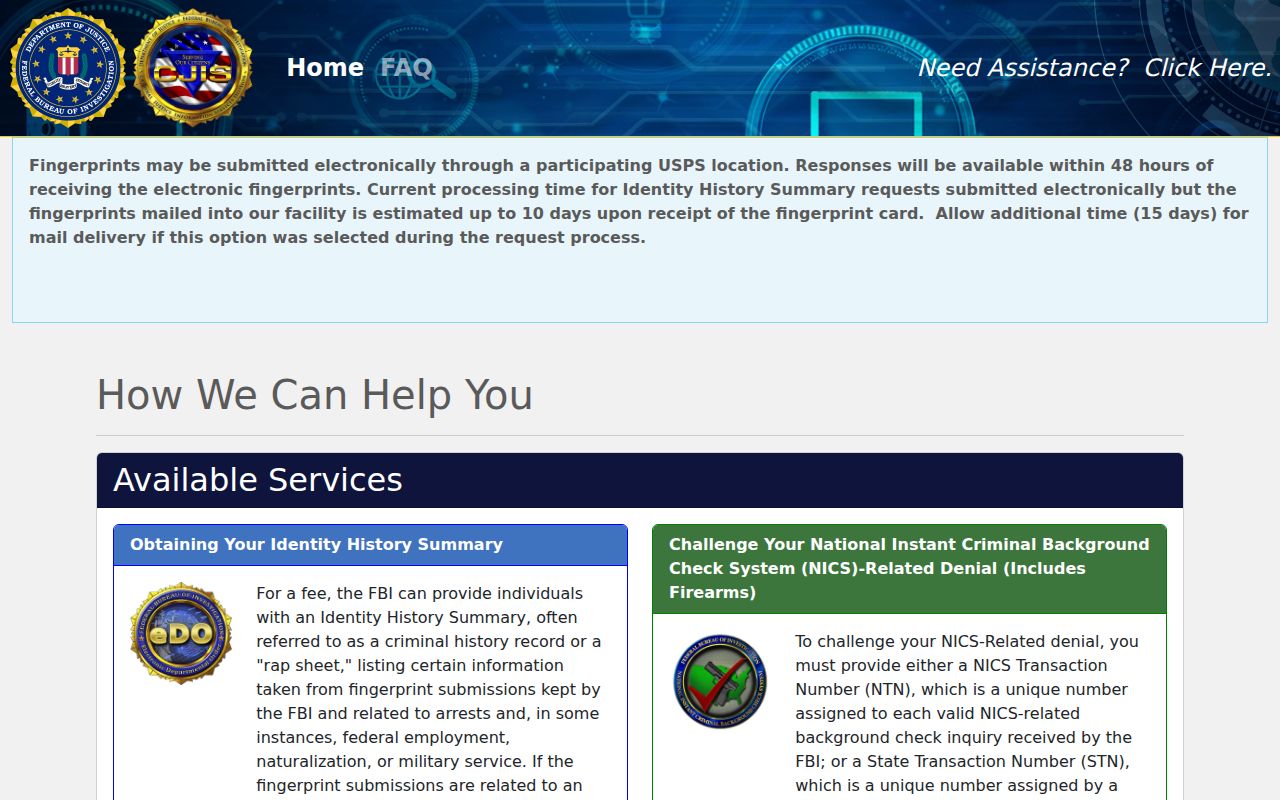
An FBI identity history is not a replacement for a current South Fork police or municipal court request.
South Fork Body-Camera Requests
A request for police video should be as narrow as possible. Supply the SFPD event number, date, approximate time, location, officer if known, and the segment sought. State whether audio, photographs, dispatch material, or the written report is also needed. This helps the town locate the right material and estimate retrieval work.
Release may not be all or nothing. Colorado criminal justice access rules allow custodians to protect information when disclosure would conflict with law, privacy interests, a fair trial, safety, or an active investigation. Video can require review and redaction. Ask for the releasable portion if part is withheld, and ask the custodian to explain the applicable basis.
Inspection by appointment may suit a paper file, while digital delivery may make more sense for media. Confirm the available format and cost with the clerk before the town begins a large search.
Reading South Fork Crime Statistics
Colorado Crime Stats is the official place to examine agency-level reported data. Select the exact South Fork reporting-agency name and a consistent year. Keep incidents, offenses, arrests, and citations separate because each counts a different event. The town weekly report should not be totaled as though every row were a crime.
Small counts can shift sharply from one year to the next. Do not turn them into a rate using an unstable population estimate, and disclose any year in which the agency did not report. State patrol and multi-agency activity can also make a casual sum of municipal tables misleading.
The official Census county profile provides context for Rio Grande County, not a ready-made South Fork crime rate.
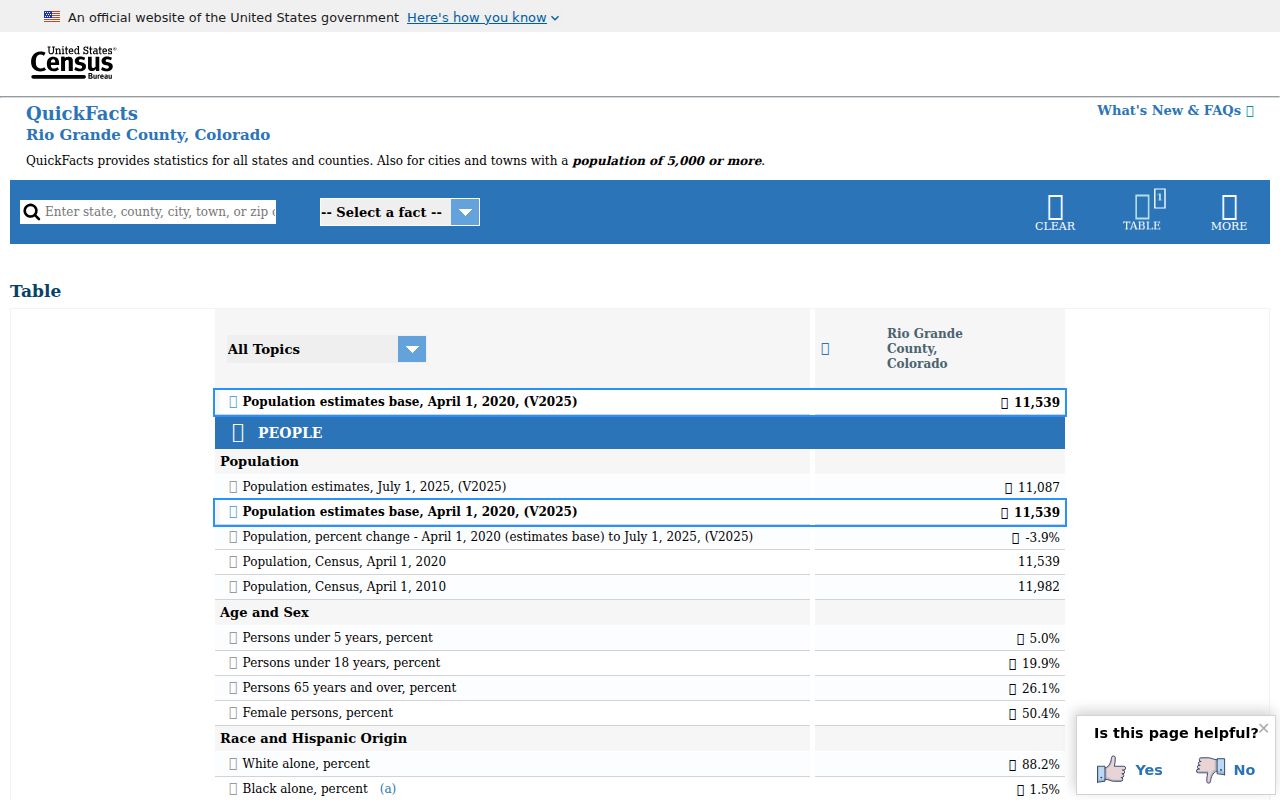
Use one Census vintage consistently and label county figures as county figures.
Public Access Rules for South Fork Records
South Fork administrative records are governed by the Colorado Open Records Act, while police and other criminal justice records are addressed by the Colorado Criminal Justice Records Act. Court records follow judicial rules and orders as well as sealing and confidentiality law. Public access does not mean every field in every file is open.
Key Statutes:
C.R.S. §§ 24-72-200.1 through 24-72-206 set Colorado Open Records Act rules for public records.
C.R.S. §§ 24-72-301 through 24-72-309 govern access to criminal justice records and custodian review.
Colorado Title 16 sealing provisions restrict access when a court seals a qualifying case or arrest record.
Juvenile material, sealed content, victim and witness details, personal identifiers, and active investigative information may be restricted. Ask South Fork for a redacted releasable copy when full release is not allowed. For court material, contact the clerk that actually holds the municipal, County Court, or District Court file.